
Golf is not just a game. It’s a way to enjoy, challenge, and have fun. This A-to-Z golf guide covers everything, making it perfect for beginners or those who want to learn the basics. You’ll learn how to feel comfortable and enjoy the game from the very first shot. It covers everything from basic technique to simple rules and how to act maturely in the course
A – Aim & Alignment
Have you ever felt frustrated when your golf shot doesn’t work as you think? You blame your swing, your distance, and even your decision. Here’s the truth
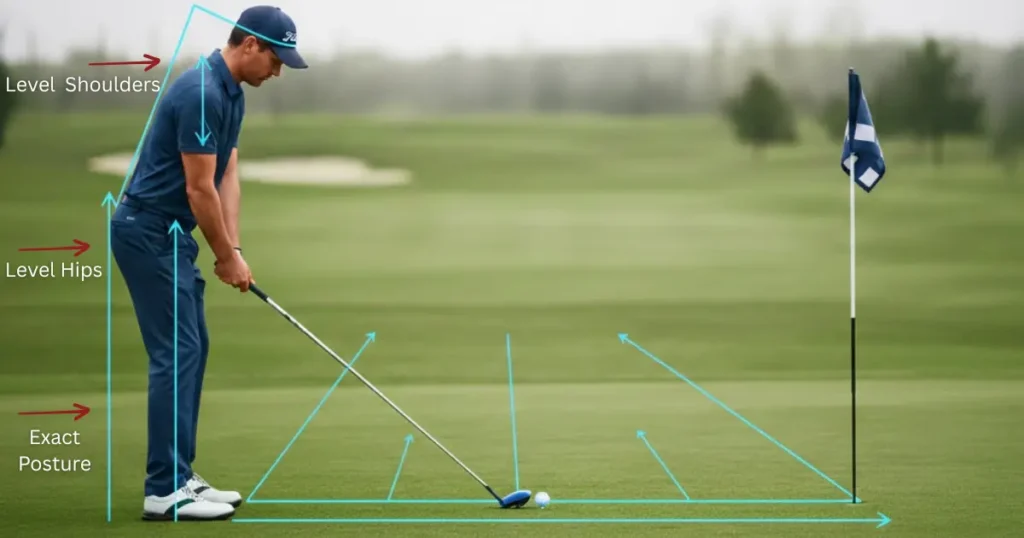
- Poor alignment
- Not a bad swing
- Causes most missed shots.
When you’re just starting, you may not prepare your body properly before you swing. If your setup and posture aren’t ready, your body can’t deliver a solid, controlled shot. Good body posture puts you in a position to hit the ball with confidence and consistency.
B-Ball Placement
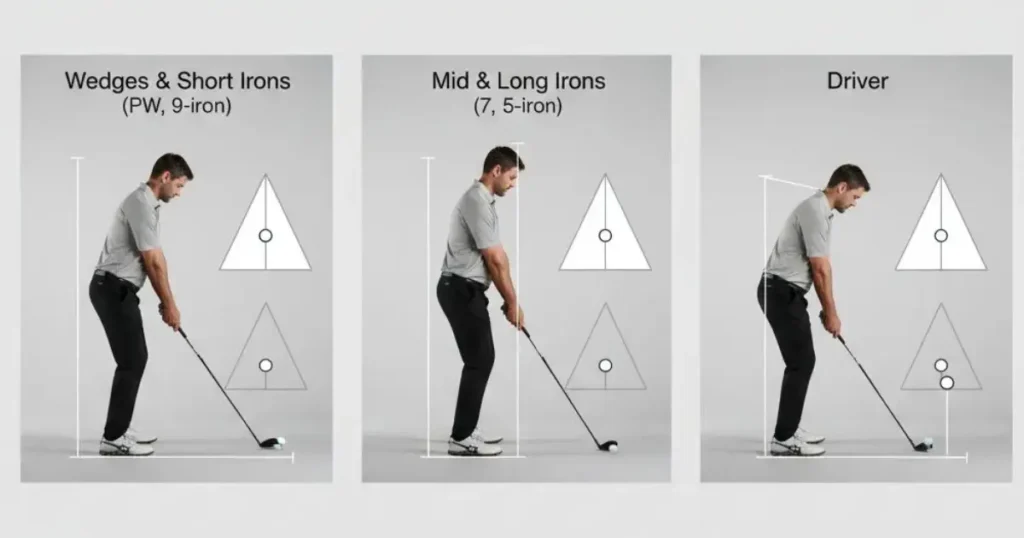
If someone comes to me and asks what the best ball placement tips are for beginners, I’ll give them three tips:
- For Wedges and short irons: Keep the ball in the middle of your stance.
- For Mid and long irons: Move the ball a little forward.
- For Driver: Place the ball near your front heel.
But why these three techniques? Even though there are so many other techniques like Chipping shots, Pitching shots, and Fairway woods, the techniques I have given you are the top three best and easiest techniques for beginners. If the golfer masters these three techniques in the beginning and learns them well, it will help them a lot on the golf course.
But remember, if your shot doesn’t go as planned, don’t worry, it happens to everyone in the beginning. Keep practicing, trust the process, and over time, your shots will become cleaner, straighter, and more confident.
C-Clubs
Golf clubs serve different purposes, and using the right club helps beginners improve more quickly. The best clubs for beginners are easy to control and forgiving. The driver is used for long shots off the tee. The fairway wood helps with long shots from the fairway or rough. The putter is used on the green to roll the ball into the hole. Choosing the right club builds confidence and improves your golf skills.
D-Drivers
As you know, using a driver can feel challenging and overwhelming for many golf beginners, but the good news is that it’s not as hard as it seems.
The secret is Simple: Focus on balance, keep your eyes on the ball, and swing smoothly. Remember, Power comes from control, not force. When you hit the ball straight and stay consistent, your distance and confidence will improve rapidly.
E – Etiquette
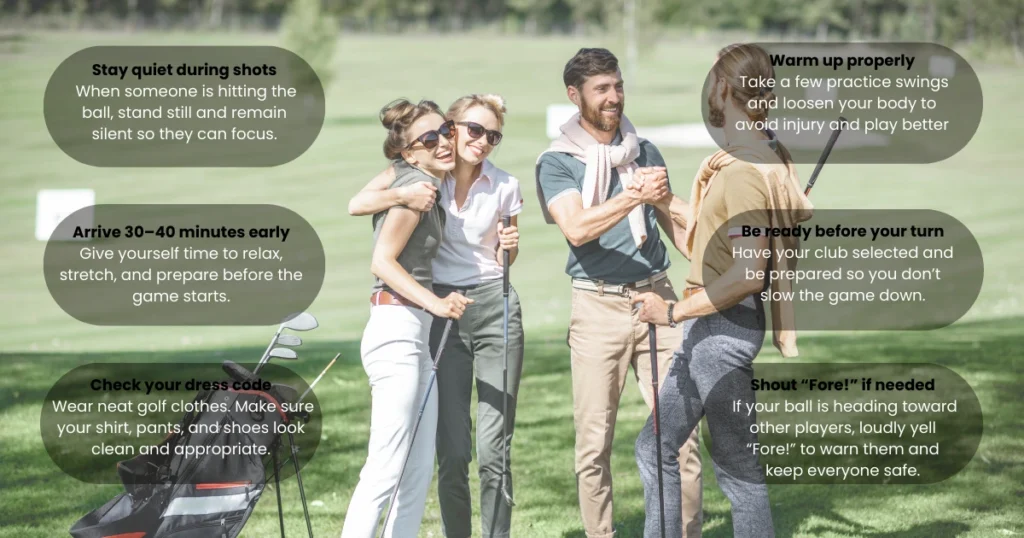
Do you know what golf etiquette really is? It’s not just a list of rules – it’s the way you behave on the golf course. Golf etiquette is about protecting the course and keeping the game smooth and enjoyable for everyone.
Good golf etiquette for beginners actually starts before you even hit a shot. Here are some important tips for you.
F – Fairway
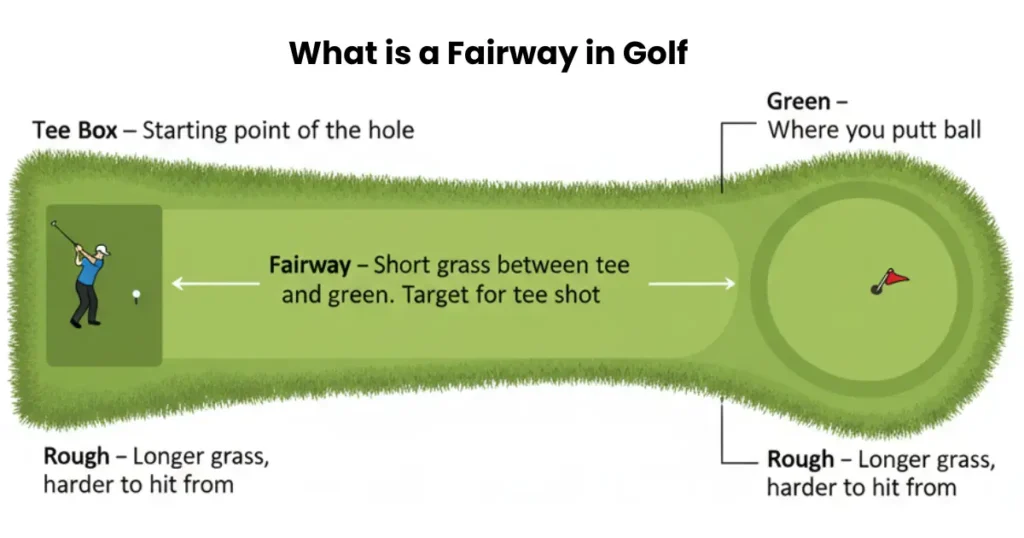
What is a fairway? The fairway is the neatly cut area between the tee box and the green. The grass is short and smooth, making it much easier to hit the ball perfectly. When your ball lands on the fairway, you can better control your next shot and aim more accurately. That’s why golfers always try to keep their ball on the fairway – it gives them the best chance of reaching the green with confidence and ease.
G – Green
The green is the area around a golf hole, carefully maintained with smooth grass and carefully designed slopes. It is where golfers use a putter to put the ball into the hole and complete the play of the hole
H – Handicap
What Is a Golf Handicap?
A golf handicap shows a player’s skill level by measuring how many strokes they usually shoot over or under par. Players with higher handicaps receive more extra strokes, which helps balance competition. These strokes are deducted from the player’s total score to calculate their net score, instead of their raw or gross score.
I – Iron Shots
Irons are golf clubs with numbers from 3 to 9. A smaller number hits the ball farther, but not very high. A bigger number hits the ball shorter, but higher in the air. Golfers use irons to hit the ball with more control.
Example: If the ball is far away, a golfer may use a 5-iron. If the ball is closer to the hole, they may use a 9-iron.
J – judging distance
Why is distance important in golf?
Well, I was someone who could never hit the perfect shot in my early days of golf. The reason was simple: I didn’t judge my distance correctly. Sometimes I chose the wrong club for distance, and my shots would be too short or too long. One day, a friend of mine said to me, “If you want better shots, you need to judge your distance. Use a yardage marker, a rangefinder, or your own experience to check how far you are from the target.” From that day on, I started paying attention to distance, and my shots improved significantly.
K – Knockdown Shot
If you feel frustrated watching your ball fly off target in the wind, a knockdown shot can give you the control and confidence you need. A knockdown shot is a golf shot that works well in windy conditions or when you need extra control. It keeps the ball flight low by using a smooth, controlled swing with a shorter backswing. Because the ball stays lower, the wind affects it less, and it lands softly with some roll. Beginners can use knockdown shots to improve accuracy and consistency. This shot makes your game more predictable and reliable.
L – Lie
What does lie mean in golf?
“Lie” has two different meanings in golf: ball lie and club lie. Ball lie refers to how the ball sits on the ground on the fairway, in the rough, or in a bunker, and it affects how well you can control and hit a shot. Club lie is the angle of the club’s sole impact; if it’s wrong, shots can go off line. Understanding both lies as a beginner improves accuracy and builds confidence.
M – Mental Game
Golf is not only about body alignment, ball placement, or club choice; it is also a mental game. I remember when I used to play golf in my early days; I made many mistakes because I didn’t focus. The ball would be right in front of my eyes, but my mind was thinking about random things like what my mom might cook for dinner tonight (sounds funny, but it’s true!). I learned that golf is not only about skill but also about focus and presence. If your mind is distracted, even an easy shot becomes hard. When you focus on the game and stay in the moment, your performance improves. Concentration is what turns practice into progress and helps you become better.
N – Nine holes in golf
Many beginners start with nine holes in golf because it is quicker and easier to learn. It reduces fatigue and helps you focus on improving swings and distance control. You can practice without feeling overwhelmed and notice small improvements. Nine holes of golf are a great way to enjoy the game and build skills.
O – Out of Bounds (OB)
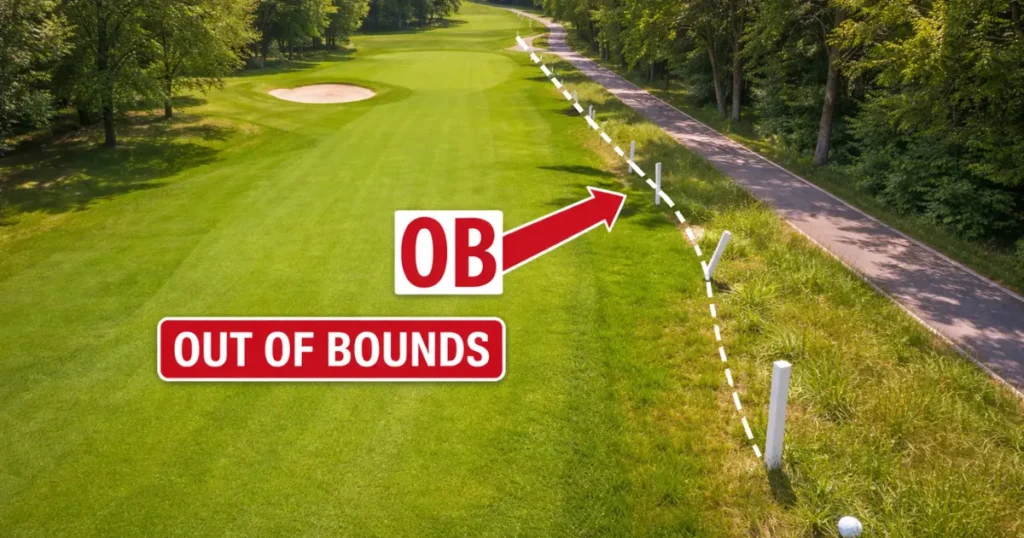
Out of bounds refers to the boundary of the golf course where play is not allowed. These areas are usually marked with white stakes or boundary lines. If your ball accidentally goes out of bounds, you must take a one-stroke penalty and replay the shot from the original spot.
P – Putting
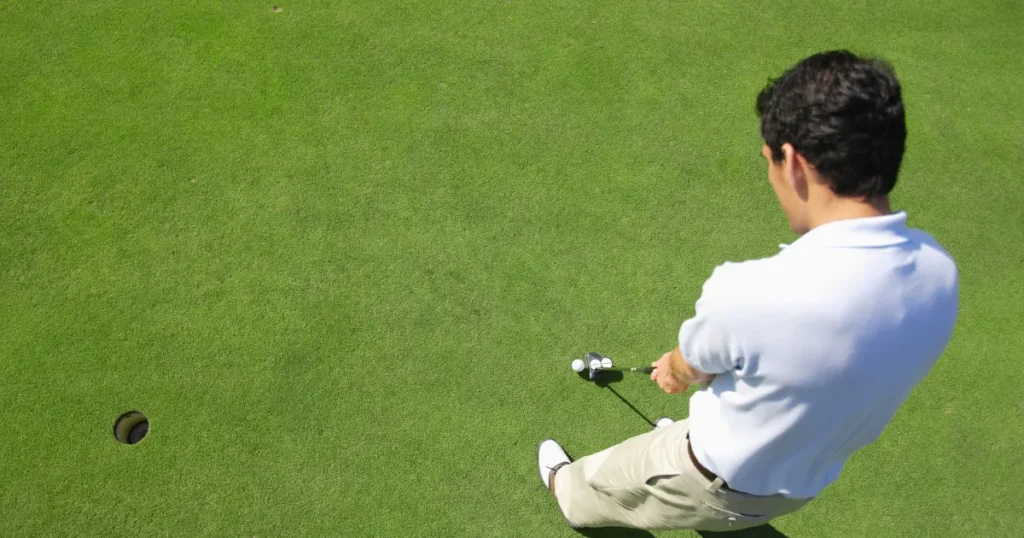
Putting in golf means using a putter to roll the ball on the green toward the hole gently. It is not about strength but about precision and control. You must aim well, manage the ball’s speed, and notice the green’s slope, because even small changes can affect where the ball goes.
Q – Quiet eye
Quiet eye in golf is a proven mental and visual technique in which you keep your eyes fixed on a small spot—usually the back of the ball—for one to two seconds before and during your stroke, especially when putting. Many beginners look up too early, which hurts their putting accuracy. By staying focused on one spot, your mind stays calm, your movement becomes smoother, and your consistency improves.
R –Reading the green
Reading the green means studying the putting surface to choose the right line and speed for your putt. Look at the overall slope, notice the grass grain, and be aware of the light and shadows that may affect your view. Identify the high point where the ball will start to break, adjust for speed, and visualize the path before you putt.
Key Points:
- Check slopes, ridges, and overall terrain
- Notice the grass grain direction
- Find the high point of the break
- Adjust for putt speed
- Visualize the ball’s path
S – Swing Fundamentals
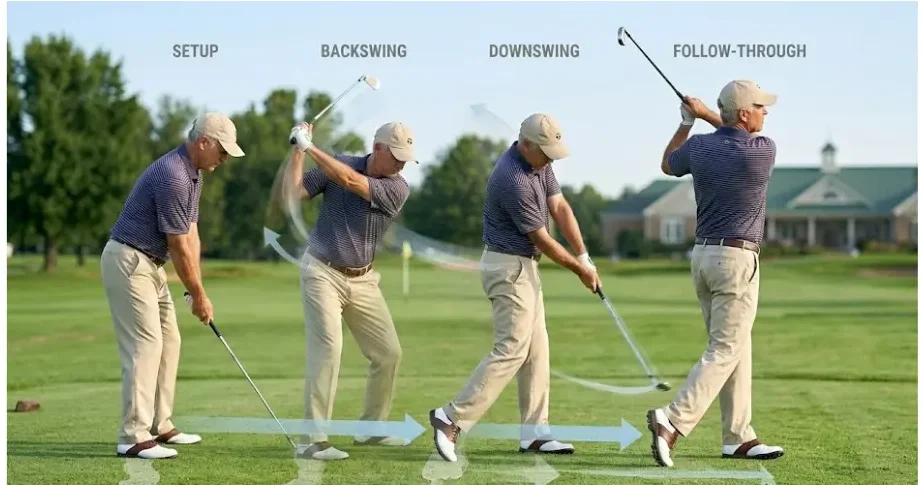
A good golf swing is a smooth, full-body motion that moves through setup, backswing, downswing, and follow-through. It depends on balance, proper weight shift, and a relaxed rhythm rather than forcing power. Many golfers sometimes feel “stuck” at the top of the swing, like the club has nowhere to go, which can lead to rushed or off-balance shots. Often, this problem is not about swinging harder but about having a better position and flow from the start. A natural turn, smooth transition, and balanced finish create more consistent and confident shots If your swing still feels inconsistent, focusing on simple basics instead of complex changes can help. These best golf tips for beginner golfers break it down in an easy way.
T – Tee Box
What is a tee box in golf used for?
A tee box is the starting area of each hole, marked by two tee markers. Golfers must tee up their ball within two club-lengths behind them. Most courses have different tee boxes at various distances. Beginners should choose the forward tees to make the game easier and more enjoyable.
U – Understanding Course Layout
A utility club, also called a hybrid, is a golf club that has features of both irons and woods. It is actually easier to hit than irons. This club helps you with distance and control, especially when you are in the fairway or rough. Many beginners use hybrids because they are more forgiving. This makes it easier for them to build confidence when taking shots with a hybrid club. Hybrids are really useful for golfers
V – Visualization
Before taking a shot, visualize the ball’s path and its landing point. This mental technique, known as visualization, helps golfers maintain focus, confidence, and composure. By clearly picturing the shot in your mind, your body naturally follows the intended motion, improving accuracy and consistency on the course.
W – Wind Play
Wind can change how your golf ball flies, so learning to adjust is very important. A headwind (wind blowing toward you) slows the ball and makes it go a shorter distance. A tailwind (wind blowing from behind) can make the ball go farther, but it may be harder to control. Crosswinds can push the ball sideways, making it tricky to aim.
To play well in the wind, you can change your club, adjust your stance, or hit a lower shot to keep the ball under the wind. Knowing how to read and react to the wind helps you hit more accurate shots and feel confident on the course.
X – X-Factor
The “X-Factor” in golf is the power created by your hip rotation during a swing. Proper hip rotation stores energy, helping your arms and club move faster and making the ball go farther. If your hips don’t move correctly, your swing loses power, even if your arms are strong.
Tips to use the X-Factor:
- Let your hips lead the swing, arms follow.
- Keep your upper body relaxed.
- Practice slowly to get the timing right.
Mastering the X-Factor gives you more distance, control, and consistency in every shot.
Y – Yardage Marker
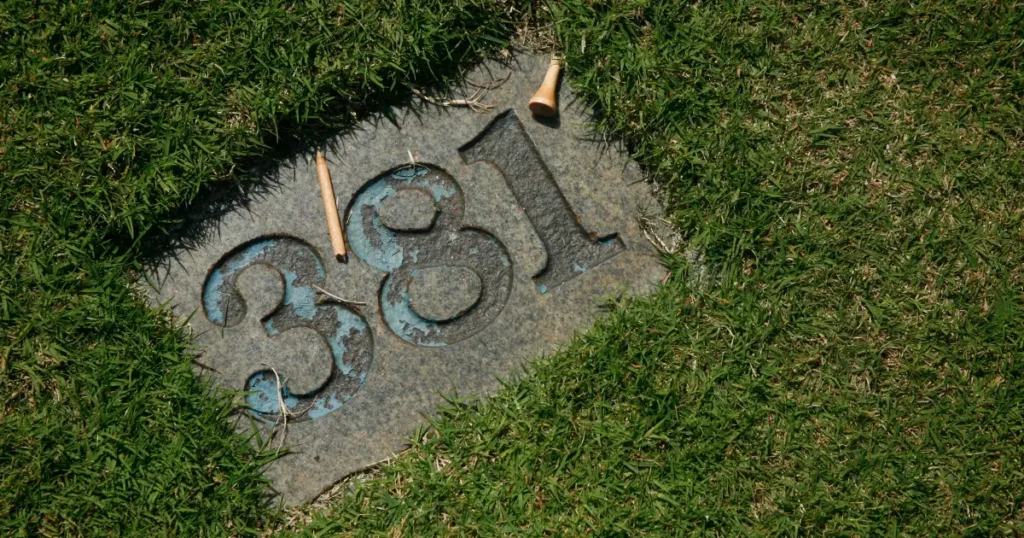
A yardage marker is a sign or object on the golf course that shows the distance to the green. It helps golfers know how far they are from the hole so they can choose the right club. Yardage markers are usually placed on the fairway and may show numbers like 100, 150, or 200 yards. Using yardage markers helps you make smarter decisions, control distance better, and improve accuracy on the course.
Z – Zero Regret Finish
Golf rewards patience. Whether you hit a great shot or a frustrating one, finish each hole without regret. Learn from it and enjoy the process.