
Most golfers spend way too much time obsessing over their swing speed. But here’s the reality: if you can’t find the fairway, your distance doesn’t matter. I learned the hard way that a “power fade” into the deep stuff is just a fancy name for a bogey. Once I started treating the fairway as my primary target rather than an afterthought, my scores stabilized almost immediately because I was finally playing from a surface designed for control.
What is a fairway in golf?
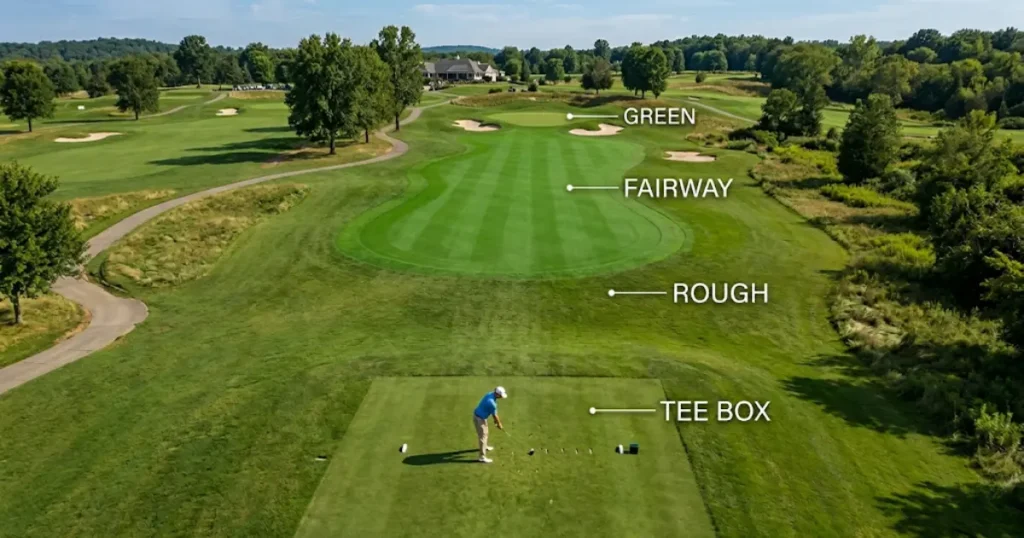
The fairway is essentially the “VIP lane” of the golf hole, acting as the smooth, groomed highway that connects the tee box to the green. While the surrounding “rough” is long and unpredictable, the fairway is kept at a very specific, short height so your ball sits up high on the blades. This gives you a clean “lie,” meaning there’s no thick grass getting between your clubface and the ball to mess up your connection. It’s designed this way to take the guesswork out of your game; when you’re on the fairway, you get consistent distance and better spin, allowing you to actually plan your approach to the pin rather than just hacking the ball out of trouble. In short, it’s the only part of the hole where the course is actually trying to help you out.
What’s the difference between the fairway and the green?
It comes down to the haircut and the goal:
- The Fairway: Mown short (usually 0.38 to 0.7 inches) to provide a target for full swings with irons or woods.
- The Green: Mown extremely low to allow for smooth ball rolling when putting.
Why does hitting the fairway actually matter?

It’s all about the “lie.” When you’re on the fairway, there’s no thick grass getting between your clubface and the ball. This gives you:
- More Spin: Better stopping power on the green.
- Predictable Distance: You avoid the “flyers” often found in the rough that reduce your accuracy.
- Better Angles: It offers the ideal route and a more straightforward second shot toward the green.
What counts as a “Fairway in Regulation” (FIR)?
This is a stat you should track to gauge your accuracy off the tee.
- The Calculation: It is the percentage of tee shots on par-4 and par-5 holes that land on the fairway.
- Note: Par-3s do not count toward this stat because the goal is to hit the green directly from the tee.
Fairway vs. Rough: Why bother?
| Feature | Fairway | Rough |
| Grass Height | Short and clean (~0.4″ to 0.6″) | Taller, variable, and “grabby” |
| Control | High spin and accuracy | Inconsistent and less control |
| Typical Clubs | Driver, woods, or long irons | Recovery clubs or high-lofted irons |
Export to Sheets
Quick tips to hit more fairways:
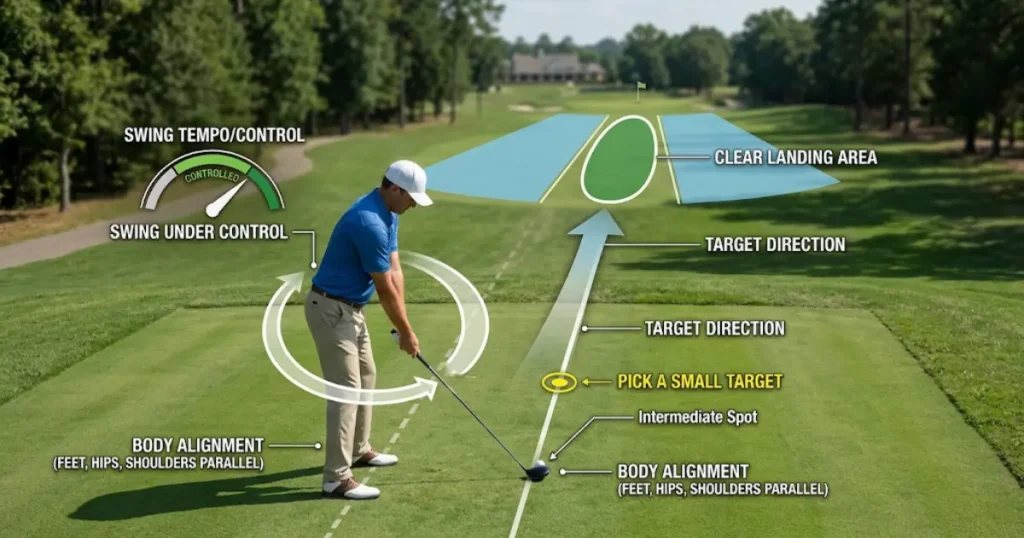
- Club Down: If the landing zone is narrow (average is 25-40 yards), consider using a 3-wood or hybrid for better accuracy.
- Pick a Small Target: Instead of aiming at the whole field, pick a specific tree or marker to tighten your focus.
- Check Your Setup: Just like ball position, if your alignment is off at the start, the fairway is going to be hard to find.
Final Thought: Respect the landing zone, lock in your alignment, and swing within yourself instead of trying to overpower the shot. Everything gets a lot easier when you’re playing from the short grass.